
Tenshodo Project
天昌堂プロジェクト
TIME
2016 − 2017, 2017 − 2019
VENUE
Shirone District (Niigata City, Niigata Prefecture), “Water and Land Art Festival 2018”
白根地区 (新潟県新潟市), 水と土の芸術祭2018
ROLE
Artist/Project Facilitator
アーティスト/プロジェクトファシリテーター
COLLABORATOR
HONMA Tomomi (Artist, Architect), HAYASHI Takatsune (Architect, Carpenter)
本間智美 (アーティスト, 建築家), 林敬庸 (大工)
KEYWORDS
Social Determinants of Health, 健康の社会的決定要因, Community Organizer, コミュニティ・オーガナイザー, Adaptive Reuse, 空き家再利用, Wellness & Art, アートとウェルネス, Aging Society, 高齢化社会, Play & Health, 遊びと健康, Community Hub, 地域拠点, Machiya Architecture, 町家建築, Niigata, 新潟, Shirone, 白根, Participatory Design, 参加型デザイン, Social Isolation, 孤立化, Three Ma, 三つの間
STORY
The Tenshodo Project repurposed Tenshodo, a clothing store that had been a cultural hub in the Shirone district of Niigata City's Minami Ward, into a community space centered on local health. The project launched in 2016, originating from a citizens' university program for training community organizers.
Shirone had a higher-than-average percentage of elderly-only households in the prefecture, and survey results showed that Minami Ward was the "least healthy" area in Niigata City—due to isolation caused by limited transportation options and the region's characteristically long winters. In response, we aimed to create a "healthy" community through art, building collaborative relationships with the ward office, residents, and local healthcare professionals. Drawing on medical research and analysis, we experimented with and demonstrated the potential of contemporary art and culture as "alternative medicine," forming a community space that fused art with wellness.
Through art and "play," we created mechanisms to nurture physical and mental health, aspiring to cultivate a place that values the three "ma" (間): time, space, and companionship.
-
About the Shirone District, Minami Ward
Since the early Showa period, Tenshodo employed local residents and served as a gathering place woven into community life—selling school uniforms for Shirone Junior High and High School students. For today's elderly residents especially, it remains a nostalgic site of their youth. As the fashion leader of its time, Tenshodo was a cultural center that shaped the district's identity.
With the passage of time, this long-standing clothing store closed six years ago and became vacant. The progression of shuttered shopping streets due to aging populations and lack of successors has become a serious problem, and revitalizing the entire community—including engaging nuclear families and young people in community activities—has emerged as a major challenge.
Additionally, survey results showed that Minami Ward was the "least healthy" area in Niigata City, attributed to a higher-than-average percentage of elderly-only households, isolation due to limited transportation, and the region's characteristically long winters. Recognizing that individual health is influenced by social determinants including our living environment, economy, and education, we believed it necessary to create a space and community development plan that leveraged artistic thinking while incorporating the perspective of "social determinants of health." Against this backdrop, we formed a community space through hands-on experimentation.
Four Functional Areas on Tenshodo's First Floor:
Area ① Free Space Immediately to the right upon entering is a wooden structure with an engawa (veranda) inspired by traditional local machiya architecture, usable for multiple purposes. This space was created through a 9-day workshop during the first year of the project as part of the Community Organizer Citizens' University activities. Led by carpenter and instructor Keiyou Hayashi, participants completed the construction together. Beyond technical instruction, this activity connected physical and mental health through cultural perspectives and environmental changes brought by the warmth and scent of wood.
Area ② "Salon" The salon, added to the back right, serves as a lecture and meeting space while primarily functioning as Niigata City's Community-Based Integrated Care Model House—a "Community Tea Room" (Chiiki no Chanoma) supporting mutual aid systems and healthy life expectancy extension models, addressing the district's high percentage of elderly-only households and isolation due to limited transportation.
Area ③ "Archive" An archive space housing "memory objects"—promotional materials and products left behind at Tenshodo. The collection consists entirely of items unearthed through repeated cleaning sessions over time, displayed creatively with various types of hangers characteristic of the clothing store arranged along the walls.
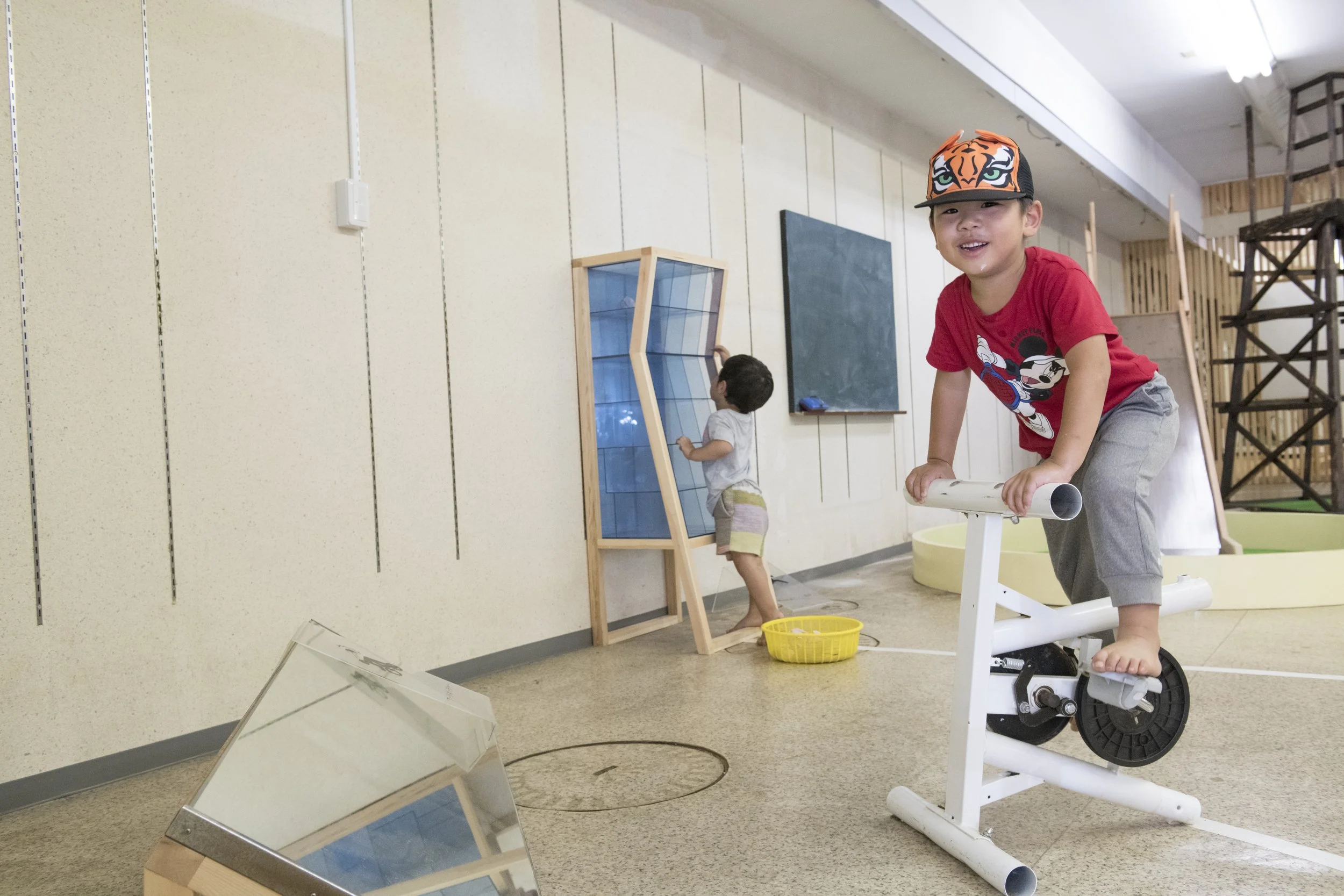
Area ④ "Play Space" Filling the spaces between these three areas is an indoor park with play equipment created in winter 2017, repurposing materials from Tenshodo—chandeliers, showcases, iron hanger racks—into approximately 30 pieces of equipment that leave room for users to imagine their own uses.
To develop ways to use this equipment, we conducted a two-day workshop with residents, joined by Professor Yukisato Shobukawa from Niigata University, who researches aging societies through public health approaches, and Professor Kunihiko Shinoda, who specializes in exercise epidemiology in collaboration with communities. Together, we generated ideas for play that integrated art and health while actually using the equipment.
We re-examined play from multiple angles—redefining words like art, health, play, and games—cross-referencing with users' perspectives. The results exceeded conventional thinking: we created dances using the equipment, generated ideas for physical movement, and discovered that health could be fostered not only through exercise but also by observing children playing joyfully from a distance or simply chatting around the slide. Based on these findings, we developed new utilization methods for Tenshodo, spatial improvements, and "play recipe" guides for reference as needed.
天昌堂プロジェクトは、新潟市南区(白根地区)で地域文化をリードしてきた洋品店「天昌堂」を再利用し、地域の健康をテーマにコミュニティの拠点をつくるプロジェクトでした。2016年、コミュニティ・オーガナイザー育成のための市民大学企画をきっかけにスタートしました。
白根地区は高齢者のみの世帯数が県内平均より多く、移動手段の不足による孤立化、新潟特有の長い冬などを背景に、南区が新潟市の中で最も「不健康」という調査結果が出ていました。そこで、アートを手段とした「健康」なまちを目指し、区役所、住民、地域医療の専門家と協働体制を構築。医療業界の視点からの調査・分析と、「代替医療」として現代アート・文化が果たせる効果をあらゆる角度から実験・実証しながら、アートとウェルネスを融合したコミュニティスペースを形成しました。
アートと「遊び」を通じて心身の健康を育む仕掛けをつくり、3つの間(時間、空間、仲間)を大切にできる場所を目指した活動でした。
-
南区白根地区について
天昌堂は、昭和初期から地域住民を雇用し、地元白根中学・高校の学生服の販売など、住民の生活に寄り添う交流の場でもありました。特に今の高齢者にとっては、青春時代を過ごした思い出深い場所。当時のファッションリーダーとして、この地域の文化をリードする中心的存在だったそうです。時代の流れと共に長年続いたこの洋品店も6年前に閉店となり空き家化。高齢化・後継者不足によるシャッター街化が進み、街の衰退化は深刻な問題でもあり、核家族・若年層のコミュニティ活動への参画や、地域全体の健全化が今、大きな課題となりました。
また、白根地区は高齢者のみの世帯数が県内平均よりも多いことや、移動手段の不足による独居化、新潟特有の長期的な冬などを理由に、南区が新潟市の中で最も不健康という調査結果があります。そこで、地域コミュニティの希薄化や、社会のストレス化が広がる現代社会に置いて、個人の健康が、私たちが生活する環境、経済、教育など含む社会的要因が関係することを示す「健康の社会的決定要因」の観点を具体的に取り入れながら、アートの発想を生かした場作り・まちづくり計画が必要だと考えました。これらを背景に実証実験しながら、コミュニティスペースを形成しました。
天昌堂の一階部分を、4つの用途に分類。
エリア①
入ってすぐ右にはフリースペースと称した地域の町家建築のデザインを応用し、多目的に活用できる縁側がある木造建築。これはプロジェクトの初年度にコミュニティーオーガナイザー育成市民大学の活動の一環として、9日間のワークショップを通じて作り上げられた空間でした。講師・大工林敬庸さんを中心に履修生と共に完成させました。技術的な指導のみならず、文化的な観点、他木の温もりや香りなどによる空間の環境変化から、心身の健康についても紐付いたのはこの活動がきっかけとなりました。エリア②「サロン」
右奥に増築したサロン。白根地区は高齢者のみの世帯数が県内平均よりも多いことや、移動手段の不足による独居化。レクチャーやMTGスペースとして活用しつつも、通常は支えあいの仕組み・健康寿命延伸モデルの拠点新潟市地域包括ケア推進モデルハウス「地域の茶の間」として利用されていました。エリア③「アーカイブ」
天昌堂に残された広報物や商品など「記憶のオブジェ」を収蔵するアーカイブスペースを構築。時間をかけて天昌堂を繰り返し掃除しながら発掘されたものばかりが収蔵されており、洋品店の特徴とも言える様々な種類のハンガーを壁に陳列するなど工夫しました。エリア④「遊び場」
そして、この3つの空間を埋めるかのように展開する遊具がある屋内公園は、2017年冬に、天昌堂で使われていたシャンデリアやショーケース、鉄のハンガー掛けなどの資材を活用し、使い手が使い方を発想する「遊び」を残した遊具を30作品ほど制作しました。この遊具の使い方を考案するために、公衆衛生的なアプローチから高齢化社会を研究する新潟大学の菖蒲川由郷先生や、地域と協働した運動疫学を専門とする篠田邦彦先生を交え、住民の方々と共に、実際に遊具を使いながらアートと健康を意識した遊びのアイディアを出すワークショップを2日間実施しました。アートと健康、遊ぶ、遊戯など言葉の再定義など、様々な角度から利用者の思いとも照らし合わせ新たな遊びを再検証。結果、遊具を使ったダンスを編み出したり、身体を動かすアイディアから、体を動かすことのみならず、こどもが楽しそうに遊ぶ様子を遠くから観察することも、ただ滑り台の周りでおしゃべりも健康に繋がるなど、既存の考えを越えたアイディアがたくさん生まれました。これを元に、新たに天昌堂の活用方法や空間整備、必要に応じて遊びの参考として活用いただける遊び方レシピ制作なども行いました。



CREDIT
ORGANIZED BY
NPO Minamirai Project
NPO法人みなみらいプロジェクト
SUPPORTED BY
福武財団 (2016-2017), 水と土の芸術祭2018, 本間智美
SPECIAL THANKS
HONMA Tomomi, KOBAYASHI Toshihiko, SHINODA Kunihiko, SHOBUGAWA Yugo (Niigata University), KONDO Katsuhiro (Chiba University)
本間智美, 小林俊彦, 篠田邦彦先生, 菖蒲川由郷先生 (新潟大学), 近藤克則先生 (千葉大学)
PHOTO COURTESY OF
HONMA Tomomi, KIKUCHI Hiroko
本間智美, 菊池宏子
If you have any questions, please contact me!